Preschool vs Kindergarten: Key Differences Explained
Choosing between preschool and kindergarten can feel a little confusing, especially for parents who are setting up early education for the first time. Both options help children learn, grow, and move toward future academic success, but they do slightly different things. Preschool often leans more toward social development, playful exploration, and learning by doing, while kindergarten usually offers more organized learning times and starts building the basic academic foundations in a more steady way. “Ashli Karaman”
Key Features
- Preschool is mostly about social emotional and developmental growth, through play based learning, kind of like “let’s try this” and “see what happens” type stuff.
- Kindergarten then shifts toward more structured academics, schedules, and that school readiness skill set, you know daily routines that keep things moving.
- Age rules can be different, but being “ready” isn’t just turning a certain birthday, it’s more than a number on a calendar.
- Emotional maturity can really steer success, often more than raw academic ability, which feels a bit unfair but it’s true.
- In preschool classrooms, kids get pushed toward exploration, creativity, and hands-on discovery, with fewer rigid expectations.
- Kindergarten puts heavier weight on literacy, numbers and classroom independence, so there’s more “do it this way” moments.
- Even so both places help children form friendships, and learn how to communicate, in their own manner, not just the teacher’s way.
- When routines stay consistent, children do better in both environments, and they tend to settle in faster.
- Parents may want to judge readiness from behavior, attention span, and confidence levels, instead of only focusing on grades they don’t have yet.
- Every child grows at their own pace, so educational choices should mirror individual needs, not comparisons with other kids.

A lot of parents assume the difference is just age, like that’s basically the entire story, but it’s rarely only that. Readiness matters, emotional maturity matters, how well a child can express ideas and communicate, plus what kind of learning needs they have, all of that counts a great deal. A child might really flourish in one setting yet still not be quite ready for the next, not because there’s something wrong, just because the “fit” is different.
When parents understand those distinctions, it gets easier to choose with real confidence instead of simply following age rules. In this guide we’ll untangle curriculum differences, point out readiness signals, explain what classrooms commonly expect, and include practical ideas from early childhood educators, so you can pick the path that matches your child’s own development journey, in a grounded way.
Preschool vs Kindergarten: What’s the Real Difference?
The biggest difference between preschool and kindergarten kinda sits in what they are mostly trying to do. Preschool tends to be about helping kids grow those early social, emotional, communication abilities. It makes room for learning through play, exploration, creativity, and regular everyday moments with other children. The setting is usually more flexible, and it feels made to spark curiosity, not chase academic outcomes, or numbers.
Kindergarten, on the other hand, works more like a bridge between early childhood education and the real formality of elementary school. Sure, play stays important, but kids begin learning inside a more tight structure. Teachers start bringing in reading readiness, simple math ideas, classroom routines, and independent work habits, so students are set up for what comes next in school in general.
A lot of parents accidentally assume that preschool is just a younger version of kindergarten. But no, each stage actually supports different developmental needs. Preschool helps children learn to be part of a group, follow basic directions, express feelings in a healthy way, and build confidence. Kindergarten then continues from that place while adding more academic responsibility, little by little.
So the choice shouldn’t be only about age. A child might technically meet the kindergarten age requirements, but still do better with extra preschool experiences if their emotional readiness or social development needs a bit more time. When parents understand the real purpose of each environment it becomes easier to choose what supports long term success, instead of moving too fast before the child is truly ready.
Feature Article: The Power of Play: Enhancing Cognitive Development in Early Childhood
Preschool vs Kindergarten Age Difference Explained Clearly
Age is usually the very first thing parents look at, but honestly it’s not only the birth date thing, it goes further than that. When you really understand the kindergarten vs preschool age difference, you can make a call for your family with development in mind, not just guesses, or those simple numbers.
Typical Preschool Age Range
Most preschool programs take kids who are about three to five years old. In that stage, children are working on social connection, language growth, emotional self control, and the first independence routines. The whole experience can feel kinda different from one place to another, yet the core emphasis stays on developmental progress, not on chasing academic results.
Typical Kindergarten Entry Age
Kindergarten usually begins around age five, even though the exact cut off depends on where you live. Kids moving into kindergarten are often expected to be more self reliant, able to sit with tasks for longer stretches, and prepared for more structured classroom work. The local age rules matter, but developmental readiness still counts just as much.
Emotional Readiness Matters
A child might look really strong academically and still get hit hard emotionally once kindergarten starts. Emotional readiness can mean learning how to handle frustration, separating from caregivers without too much upset, rolling with new routines during transitions, and forming good interactions with other kids. These skills end up shaping how the child does in the classroom, even when the child seems “ready” on paper.
Cognitive Development Factors
Cognitive readiness is kind of like, being able to listen, keep up with multi-step instructions, spot patterns in what’s happening, and staying locked-in during tasks. Even though academic skills matter a bit, it’s usually cognitive maturity that decides how well children take in classroom directions, plus how smoothly they handle day to day routines.
Every Child Develops Differently
The kindergarten vs preschool age gap should never be treated like a hard rule for everyone. Kids develop at their own tempo. Some are ready to jump into kindergarten not long after they turn five, while others just really need a few more preschool moments that build confidence and readiness.
Feature Article: Preschool Graduation Ceremony Ideas That Kids Love
Preschool vs Kindergarten Curriculum and Learning Style
Both settings aim for learning, but the teaching style and educational focus feel different. When parents understand that, they can set expectations that are more realistic.
Play-Based Learning in Preschool
Preschool classrooms tend to emphasize exploration and discovery. A typical day might include art, sensory activities, story time, songs, and make-believe games. Through these kinds of experiences, children build key developmental abilities while they’re also having fun in ways that promote curiosity and social connection.
Structured Academics in Kindergarten
Kindergarten shifts things toward more formal instruction. Teachers start introducing early skills in reading, writing, and basic math concepts. The lessons usually run on a steady plan, with clear learning targets meant to help children meet elementary school expectations.
Classroom Independence Expectations
In preschool, teachers offer more hands-on guidance throughout the day. Kindergarten expects a higher level of independence. Children are usually asked to manage personal items, stay on track with classroom routines, and finish simple jobs with less direct help.
Learning Through Exploration vs Instruction
Preschool emphasizes learning through experience. Children discover concepts naturally through play and interaction. Kindergarten combines experiential learning with direct instruction, helping children develop academic skills while maintaining age-appropriate engagement.
Assessment and Progress Monitoring
In preschool, assessment is usually tied to developmental mileposts and also social progress. In kindergarten, the evaluations start leaning more toward academic growth, like literacy progress, number recognition, and general classroom readiness skills. Those pieces matter because they support what comes next in school.
Feature Article: Top 20 Benefits of Play-Based Learning for Preschool Growth
Preschool and Kindergarten Similarities Every Parent Should Know
Even though they differ, there are still a lot of meaningful similarities between preschool and kindergarten that really help healthy child development and getting ready for school.
Social Development Remains Essential
Both settings put strong emphasis on social growth. Kids learn to cooperate, share, communicate, handle disagreements, and grow friendships. Those relationship abilities end up supporting longer term academic outcomes, and also personal success later on.
Communication Skills Continue Growing
Language growth stays important in both places. Children build vocabulary, strengthen listening, improve conversational skills, and practice self-expression during routine classroom tasks, storytelling, and peer interactions. It’s all connected, even when it’s small things throughout the day.
Routine Builds Security
Having consistent schedules helps children feel secure and confident. Daily routines teach responsibility, make the day more predictable, and build early time management. At the same time it reduces anxiety during transitions, especially when the environment changes or something new comes up.
Emotional Growth Is Encouraged
Helping emotional development may be one of the strongest overlaps. Teachers guide children to name emotions, practice self-regulation, develop empathy, and deal with social challenges in a more effective way, so kids can navigate things without feeling overwhelmed.
Learning Through Engagement
Whether through play based exploration or more structured lessons, both of these spaces kind of push kids to be active, not just sitting there. Children tend to learn best when they are pulled in, curious, and gently guided so they can probe ideas in ways that actually make sense for them.
Feature Article: Preschool Stories That Kids Love to Hear Again
How to Decide Between Preschool vs Kindergarten for Your Child
Picking the right learning place isn’t just a matter of age or “can they do the worksheet yet”, it’s more like a bunch of little signals you notice over time.
Assess Social Readiness
Watch how your child does with other children. Do they share, take turns, follow group directions, and still feel comfortable around people? Usually strong social skills help with smoother classroom transitions, less awkwardness and more “I know what to do”.
Evaluate Emotional Maturity
Kids going into kindergarten should show a reasonable ability to manage feelings. If you see lots of meltdowns, separation anxiety, or they really struggle when something changes, that can suggest they may need a bit more preschool time, not because anything is wrong, just because they’re still growing that skill.
Consider Attention and Focus
Simple self care really counts. Children should be able to handle things like using the restroom on their own, keeping track of belongings, and moving between activities with only minimal help.
Review Independence Skills
Basic self-help abilities matter. Children should manage simple tasks such as using the restroom independently, organizing belongings, and transitioning between activities with minimal assistance.
Trust Individual Development
When you’re deciding between preschool vs kindergarten, try not to measure your child against others. Development isn’t a straight line and everybody has their own rhythm. Your choice should match your child’s specific strengths, challenges, confidence, and readiness, not what someone else expects or assumes.
Real Classroom Insight: What Teachers Wish Parents Knew
One of the biggest challenges educators come across is the misunderstanding that academic readiness alone predicts success. But honestly, it is not that simple, because emotional resilience often matters far more than people think. Kids who can handle disappointment, cooperate with peers, and then flex to new situations tend to transition in a smoother way, than kids who only know letters and numbers.
Teachers also notice that a lot of parents add extra pressure onto early academics. Sure, reading readiness is useful, but young children really do better when they get chances to build confidence, independence, problem-solving skills, and social competence. Those early cornerstones seem to back up future academic growth more strongly than memorization drills.
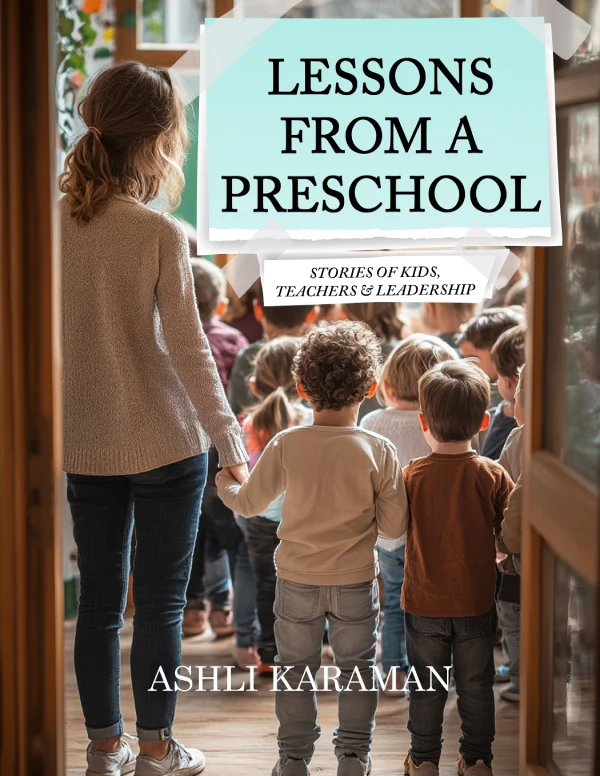
At this point in understanding early education, many parents feel kinda flooded by conflicting opinions and advice. That’s exactly where insights from Ashli Karaman start to matter. Through her book LESSONS FROM A PRESCHOOL: STORIES OF KIDS, TEACHERS & LEADERSHIP, plus the real world preschool experiences she shares, she lays out the messy, funny, and honestly very human parts of early childhood education. Her perspective helps families look past checklists, and academic benchmarks, so they can make steadier choices based on what children truly need to thrive.
Feature Article: Best Parenting Books Every Parent Should Read
Final Thoughts
Picking between preschool and kindergarten can feel kinda messy, especially if your child is doing this for the first time, and you are not really sure what “counts” as the right early education. Both places do help kids learn,grow, and get ready for what comes later in school, but they do it in different ways. Preschool tends to center on social development, curiosity, and learning through play, while kindergarten usually brings in a bit more structure, plus early academic foundations.
A lot of parents think the only real difference is age. But that’s not the whole story. Readiness, emotional maturity, how a child communicates, and what kind of learning rhythm they need all matter just as much. Sometimes a kid will shine in one environment and then seem not quite prepared for the next, even if the calendar says they “should” move on.
Knowing where these differences actually show up can help you make decisions with more confidence, not just follow age rules. In this guide, we’ll walk through how the curriculum shifts, what readiness can look like, what teachers typically expect inside the classroom, and some practical points from early childhood educators so you can choose the best route for your child’s own development journey, in a way that feels right.
FAQs
What is the main difference between preschool and kindergarten?
Preschool focuses on social, emotional, and developmental growth through play-based learning. Kindergarten introduces more structured academics, classroom routines, and foundational literacy and math skills that prepare children for elementary school.
At what age should a child start preschool or kindergarten?
Most children begin preschool between ages three and five. Kindergarten typically starts around age five, depending on local enrollment requirements and individual readiness factors.
Is preschool necessary before kindergarten?
Preschool is not always required, but it can help children develop important social, emotional, and communication skills that support a smoother transition into kindergarten and formal schooling.
How does kindergarten prepare children for primary school?
Kindergarten introduces structured learning, classroom expectations, literacy development, early math concepts, independence, and problem-solving skills that prepare students for elementary education.
What skills are learned in preschool vs kindergarten?
Preschool emphasizes social interaction, emotional development, creativity, communication, and play-based exploration. Kindergarten builds upon these foundations while introducing reading readiness, writing skills, basic mathematics, and classroom responsibility.
Latest Blogs


