
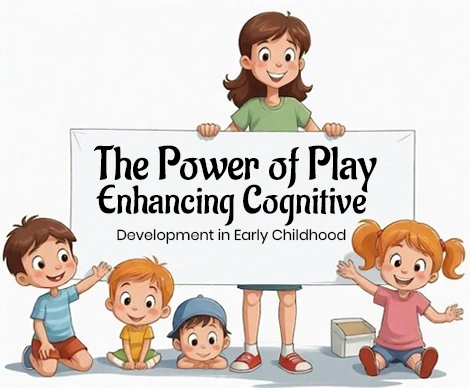
The Power of Play: Enhancing Cognitive Development in Early Childhood
Children use playtime for learning purposes, which serves as their primary educational tool. The growth of young minds during their first three years of life happens through the creation of neural paths which later shape their ability to think and feel. Children use playtime to develop their cognitive skills because they can test their ideas and playtime experiments and solve real-world problems. They develop memory and language and attention span and logical reasoning skills through playful experiences which they use to build their skills.
Through block stacking and grocery store role play and sensory bin texture exploration, children develop essential brain pathways which prepare them for academic success. Children use playtime as a secure space to test ideas, which helps them grasp how one thing leads to another. Playtime activities help children develop as learners because they create a path toward building their core abilities which lead to life success.
Key Features
- Playtime functions as a fundamental force which drives complete brain development in young children.
- Children develop their cognitive abilities during playtime, which helps them improve their memory and attention and reasoning abilities.
- The body creates new brain connections through sensory experiences.
- Learning happens through both types of play, which include both organized and free play.
- Through social play activities, people develop their ability to work together and speak with others.
- The academic success of students in elementary school improves when they experience playful learning activities.
- Exploration activities provide a natural way for children to develop problem-solving abilities.
- Adults provide essential support, which helps children develop their playtime activities.
- Play-based learning spaces help students develop their creativity and ability to work independently.
- The development of playful learning activities creates a framework which leads to success throughout an entire lifetime.
What is Cognitive Development Through Play?
Children’s cognitive development includes their thinking processes and their methods for exploring and remembering information and solving various problems. The process involves people developing skills which include their capacity to concentrate and retain information and their abilities to think and use language and make choices. The brain experiences its highest rate of growth during the early years of childhood development. The experiences which children have during their early developmental stage will determine their future capacity to learn and their rate of intellectual development.
Cognitive development through play occurs when children engage in activities that challenge their thinking while remaining enjoyable. Children use various methods to test their concepts through activities which involve shape sorting and tower building and world creation. Through play children discover new things which lead them to ask questions and find answers to their inquiries. They use repetition together with experimentation to develop their abilities and build their brain connections. Playful learning requires active participation from students to create educational experiences which they will remember.
Understanding Sensory Play and Brain Development
Children first begin to explore their world through sensory experiences which serve as their initial method of learning. The brain receives stimulation through three sensory experiences which include children touching sand and listening to music and tasting new foods and watching colors mix. The connection between sensory play and brain development exists because sensory input plays a crucial role in creating and maintaining neural pathways. The activities which children perform through these activities lead to improvements in their ability to perceive things and control their movements and handle their emotions while they develop better focus and memory skills.
Children develop their fine motor skills through hand movements which involve pouring water between containers and molding clay with their hands. Children expand their vocabulary through sensory exploration when they explain various textures and scents and sounds they encounter. By engaging multiple senses simultaneously, children build stronger associations in the brain.
The Functions of Play: More Than Just Fun
lay serves multiple developmental purposes beyond entertainment. The activity develops resilience while improving communication skills and fostering creative development. Children learn to interact with their environment through play which serves three fundamental functions that cover emotional and social and intellectual development. Adults who understand different play functions can create valuable educational spaces by using their knowledge to design effective learning spaces.
Physical Play
Children engage in physical play through activities that involve running and climbing and jumping. Running and climbing and jumping activities help children develop their coordination skills and balance abilities while learning to understand their body movements in space. Children learn to solve problems through risk assessment while they face obstacles in their path. The brain receives oxygen through movement which helps people focus and remember information better. Physical obstacles teach people to keep trying until they achieve their goal which helps them create vital connections between their cognitive and emotional systems.
Constructive Play
Constructive play includes activities that require people to build or stack or assemble or create different types of objects. Block and puzzle activities help children develop their basic logical reasoning and planning abilities. Children test cause-and-effect relationships by discovering which structures can stay upright and which ones will fall down. The procedure develops mathematical skills because it teaches spatial understanding and sequencing abilities while it promotes artistic expression and self-directed discovery.
Pretend Play
Children develop their imaginative abilities through pretend play which also helps them become more understanding of others. Through role-playing as doctors and teachers and explorers children develop their language skills and storytelling abilities and social interaction skills. Play activities assist children to develop their executive functioning abilities through activities that require them to control their time and tasks. The program offers children a secure space to handle their feelings while they experiment with real-life situations.
Social Play
Social Play Social play occurs when children interact with their fellow children. Through collaboration and shared problem-solving they acquire the ability to communicate with others and develop their emotional intelligence. Children who practice rule establishment and conflict resolution and turn taking activities develop their ability to think logically and understand others. The experiences that people go through in life develop their ability to work with others and lead others during their future life.
Exploratory Play
Exploratory Play Exploratory play exists to help people learn through their natural desire to discover new things. Children study different materials and surface types and their physical surroundings to learn about operational mechanisms. The hands-on experimentation process inspires students to ask questions while developing their ability to think critically. Children establish scientific reasoning skills by collecting results and adjusting their behavior to enhance their understanding of the subject matter.
How Cognitive Development in Early Childhood Shapes Future Learning
Early experiences establish the brain’s fundamental structure. The first years of life enable children to develop cognitive skills which create essential academic competencies and problem-solving abilities for future use. Through intentional play activities children establish the neural pathways which support their ability to read and count and think logically.
Language Development
Language Development Play assists children in developing their language skills by providing them with new words and chances to engage in important discussions. The activities of storytelling and role-playing and interactive games enable children to build their comprehension skills while developing their ability to express ideas and communicate with others. Through playful activities children develop solid language abilities which become the base for their future reading and writing skills while they build confidence for social and academic situations.
Executive Function Skills
Executive function skills, such as working memory, flexible thinking, and self-control, are strengthened through structured and imaginative play. Children practice following rules, adapting strategies, and remembering instructions during games and activities. These experiences enhance cognitive regulation, decision-making, and planning abilities, directly contributing to classroom readiness, problem-solving, and academic achievement throughout early learning stages.
Mathematical Thinking
Children develop their mathematical understanding when they engage in building and sorting activities which help them identify patterns. Children learn to count and measure and compare objects and understand spatial relationships through their natural play activities. Through these practical activities children develop their numeracy competencies which lead to logical thinking abilities that establish a secure base for their future mathematical education while enabling them to tackle academic challenges through inventive problem-solving methods.
Problem-Solving Abilities
Through play children develop their problem-solving abilities because they can test different solutions. The method helps people learn two vital skills which include persistence and analytical thinking alongside their capacity to adjust. Children acquire resilience and confidence through learning that errors create new pathways which develop their critical thinking abilities needed for handling both academic challenges and real-world situations within a safe environment that requires no pressure.
Creativity and Innovation
Through imaginative play children develop their creative abilities because they need to create new concepts and evaluate various solutions and examine different options. Through art and role-play and building activities children become able to establish new ideas while developing their capacity to think flexibly and invent new solutions. This creative foundation empowers children to face challenges with innovative solutions while developing confidence and flexible thinking abilities which will serve them in their future learning and teamwork and new challenges they will encounter during their educational journey and throughout their lives.
The Role of Adults in Facilitating Cognitive Growth Through Play
Adults are essential partners in playful learning. By providing guidance and encouragement, parents and educators create environments where exploration thrives. Thoughtful involvement enhances cognitive development through play without limiting a child’s independence.
Creating Safe Spaces
Safe environments encourage risk-taking and experimentation. When children feel secure, they are more willing to try new challenges and learn from mistakes.
Asking Open-Ended Questions
Questions like “What do you think will happen?” stimulate critical thinking. Adults can extend play experiences through conversation and reflection.
Modeling Curiosity
Demonstrating enthusiasm for discovery inspires children to explore. Adults who show curiosity reinforce lifelong learning habits.
Providing Diverse Materials
Varied toys and materials stimulate imagination and problem-solving. Rotating resources keeps engagement fresh and stimulating.
Balancing Guidance and Independence
Support should empower, not control. Allowing children to lead their play fosters autonomy and confidence.
Best Types of Play for Cognitive Development
Certain activities are particularly effective in strengthening thinking skills. Intentional choices in play experiences can significantly enhance learning outcomes.
Role-Playing Activities
Role-playing games are an opportunity for children to express themselves as different kinds of characters and thus develop storytelling, imagination and social-emotional skills. By giving importance to empathy in decision making, they work out other people’s views and live through different scenarios in drama games. Problems are solved, challenges being given various different approaches, much confidence is built in the child, leading to a more balanced cognitive and emotional development in early learning.
Building Blocks and Construction Toys
Playing with construction blocks and tools develops spatial and engineering reasoning skills besides fostering problem-solving techniques. Play situations are planned, created, and assessed according to balance and stability. This activity enhances fine motor skills and hand-eye coordination, as well as fostering creativity. In playing, kids learn about cause and effect, and design in an iterative manner; which in return help develop the resilience to take challenges in a calculated way and form a strong foundation for STEM thinking.
Interactive Board Games
Playing with tabletop board games develops important social and cognitive skills, such as knowing the rules, waiting for one’s turn, and thinking about strategies. Board game activities develop memory, attention, and focus, whilst building successful team-orientated collaboration through friendly competition. Children learn to plan, adapt strategies, and regulate emotions according to anticipated outcomes. Such games mix fun with structured learning experiences and develop critical thinking, patience, and good decision-making skills in children.
Puzzle Solving
Puzzle solving encourages pattern recognition, logical reasoning, and problem-solving skills. Children practice patience, attention to detail, and persistence while working through increasingly complex challenges. Completing puzzles fosters a sense of accomplishment, builds self-confidence, and strengthens memory. These activities also enhance fine motor skills and spatial awareness, teaching children to think critically and approach tasks systematically while enjoying the process of discovery.
Nature Exploration
Nature exploration engages children’s curiosity, observation, and scientific thinking. Outdoor activities encourage exploration of plants, animals, and natural phenomena, fostering cause-and-effect reasoning and sensory engagement. Children develop problem-solving, critical thinking, and environmental awareness while learning through direct interaction with the world around them. Nature play supports both physical development and cognitive growth, promoting holistic learning experiences that extend beyond the classroom.
How Ashli Karaman Can Help Your Preschool Journey
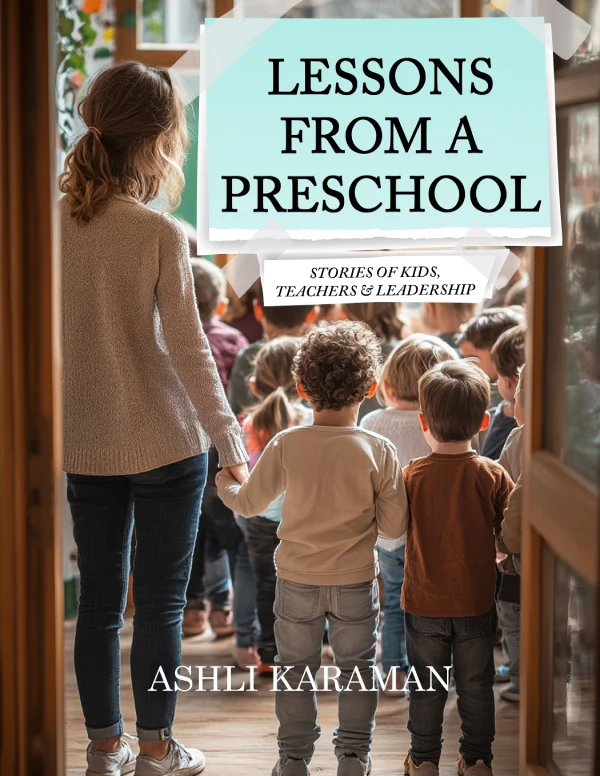
Ashli Karaman is a respected early childhood educator dedicated to empowering parents and teachers with practical insights. Her book, Lessons from a Preschool, provides actionable strategies grounded in classroom experience. With a background in early education and years of hands-on teaching, she translates complex developmental research into clear, accessible guidance for families navigating preschool years.
Through workshops, resources, and her writing, Ashli Karaman emphasizes cognitive development through play as a cornerstone of school readiness. Her approach blends research-backed practices with compassionate understanding of young learners. Families trust her expertise because she bridges theory and practice, offering tools that support meaningful play in development while nurturing confidence and independence in children. Her work helps transform everyday moments into powerful learning opportunities.
Final Thoughts
Play is far more than recreation; it is the engine of intellectual and emotional growth. By prioritizing cognitive development through play, families lay the groundwork for resilience, creativity, and lifelong curiosity. From sensory exploration to imaginative storytelling, each playful moment strengthens neural connections and builds essential skills. Investing in purposeful play today ensures children are prepared for tomorrow’s challenges with confidence, adaptability, and a strong foundation for lifelong learning.
FAQs
What is cognitive development in play?
It refers to how children build thinking, reasoning, and problem-solving skills through playful experiences.
What are the 4 types of cognitive play?
Exploratory, constructive, pretend, and rule-based play all support intellectual growth.
Why does play help cognitive development?
Play engages curiosity, experimentation, and memory, strengthening neural pathways essential for learning.
What are the 4 stages of cognitive development?
Sensorimotor, preoperational, concrete operational, and formal operational stages describe how thinking evolves with age.
How play enhances cognitive development?
Play encourages exploration, builds executive function, strengthens memory, and supports language and reasoning skills.
Latest Blogs